

Teaching and Pedagogy
Grace has a wide range of teaching experience and has taught around 350 students across Colby College and Boston University. She has experience teaching the two survey courses for the African American and Black Diaspora Studies program at Boston University; African American Literature and African American History. This year she is teaching the Intro to African American Literature class at Colby. She has also taught the interdisciplinary introductory course in Women & Gender Studies at Boston University. In addition, during her time as a PhD candidate she developed her own seminar class entitled “Black Venus: American Beauty” which she taught as instructor of record in Spring 2023. She has been responsible for groups of students as large as eighty and as small as eight and has taught across all undergraduate levels.
She has taken two pedagogy classes at Boston University: one focused on Digital Pedagogy and strategies for navigating the global COVID-19 pandemic, and another offered by the Core Curriculum on pedagogy for teaching Black Classicism. She has also completed training in inclusive teaching at Boston University. In addition, she has regularly taken part in workshops and professional-development sessions organized by the Center for Teaching and Learning at Colby College, including:
workshops on inclusive syllabus design and equitable assessment practices, which helped her revise course materials to clarify learning objectives, embed accessibility, and reduce bias in grading.
seminars on active-learning techniques and small-group facilitation, where she practiced designing breakout activities, writing effective prompts, and using formative checks to monitor student understanding.
a reading group centered on culturally responsive teaching and supporting diverse learners, which emphasized building classroom climates that validate varied perspectives and implementing strategies for supporting first-generation and multilingual students.
These CTL workshops have broadened her instructional toolkit, informed her course design, and deepened her commitment to student-centered, equitable teaching practices.
Teaching at Colby
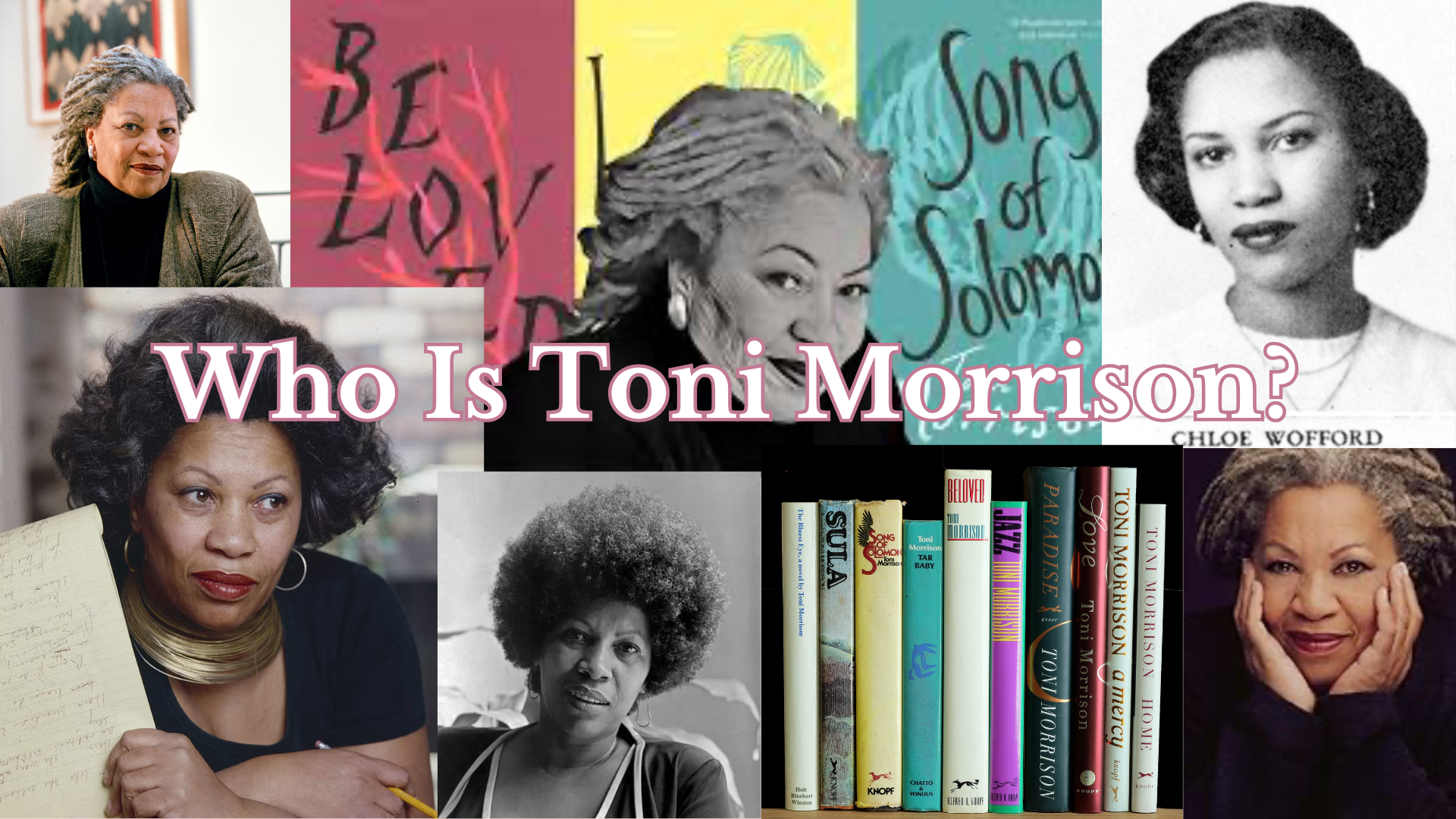
During her time as a Visiting Assistant Professor of English at Colby College she taught a long anticipated course on Toni Morrison which explored the breadth of Morrison’s work across her novels, essays, playwright, work as an editor on The Black Book and as a children’s book author. She is revisiting this course this AY much to her excitement! She also taught a course on Literature of the Urban and Rural as part of Colby’s Literature of the Environment concentration and a course on African American Gothic, a much beloved class by students.
In the coming academic year Grace will be teaching classes introducing students to African American literature and a class on Literature and Food that pulls from her new research on Morrison and sugar. She will also be continuing to teach her introductory writing class for freshmen called “Writing as a Fan,” revised and ready for a third iteration.
“The classroom, with all its limitations, remains a location of possibility. In that field of possibility we have the opportunity to labor for freedom, to demand of ourselves and our comrades, an openness of mind and heart that allows us to face reality even as we collectively imagine ways to move beyond boundaries, to transgress. This is education as the practice of freedom.”
— bell hooks
Teaching Experience
-
African-American Studies 103/ English 129: Introduction to African-American Literature
Students in this survey course covered African-American Literature from the seventeenth century to the present day. As a teaching fellow I facilitated discussion, lectured, and aided the professor in the daily running of the class.
Boston University. Fall 2019.
-
Women and Gender Studies 102: Gender and Sexuality II: An Interdisciplinary Introduction
This interdisciplinary introduction to Women and Gender Studies included approaches from the humanities, social sciences, and STEM fields. Students followed the intellectual history and development of the field of Women and Gender Studies, read feminist theory, and applied gender critical lenses to a variety of topics. As teaching fellow I facilitated two solo class discussion sessions, revision sessions for the midterm, and oversaw the switch to a virtual teaching model after the onset of the COVID-19 pandemic.
Boston University. Spring 2020.
-
African-American Studies 371/History 298: African-American History
Students in this survey class followed the arc of African-American history from 1619 to the present day. Students were encouraged to engage with historiography and multimedia assignments to understand the narratives of history. As a teaching fellow I led class discussions, graded assignments, and as this class was on Zoom, supported the professor in the hybrid model of learning for the semester.
Boston University. Fall 2020.
-
HUB Social and Racial Justice 101: Systems and Structures
Students in this class covered the history of the systems of structural inequality, oppression, and anti-Black racism that inform modern American culture, society, and governance. Students explored structural inequality through units on the law, housing, education, health, media and culture, and the environment/sustainability.
As teaching fellow, I was responsible for three discussion sections, building a classroom community for my students, and ensuring we had respectful, inclusive, and courageous conversations.
Boston University. Fall 2022.
-
American Studies 301: Black Venus: African-American Women Artists and American Beauty
“Can beauty provide an antidote to dishonor?” Saidiya Hartman asks in her essay “Venus in Two Acts”. What would it mean to center Black women’s artistic and cultural production in discussions around American concepts of beauty? This course explores how the figure of the Black Venus can be used to explore and interrogate American culture and ideas of the “the beautiful”. Students will be introduced to a variety of methods and approaches that underpin the field of American Studies by examining iterations of the Black Venus as she emerges through time from 1773 to the present day. Although we will concentrate on the figure of the Black Venus, students will also be introduced to her sister goddesses in other world mythologies such as Oshun, the West African goddess of love. They will be asked to consider how the classical figure of Venus, and specifically African-American iterations and reclamations of the goddess, have helped shape American popular culture and aesthetics.
Boston University. Spring 2023.
-
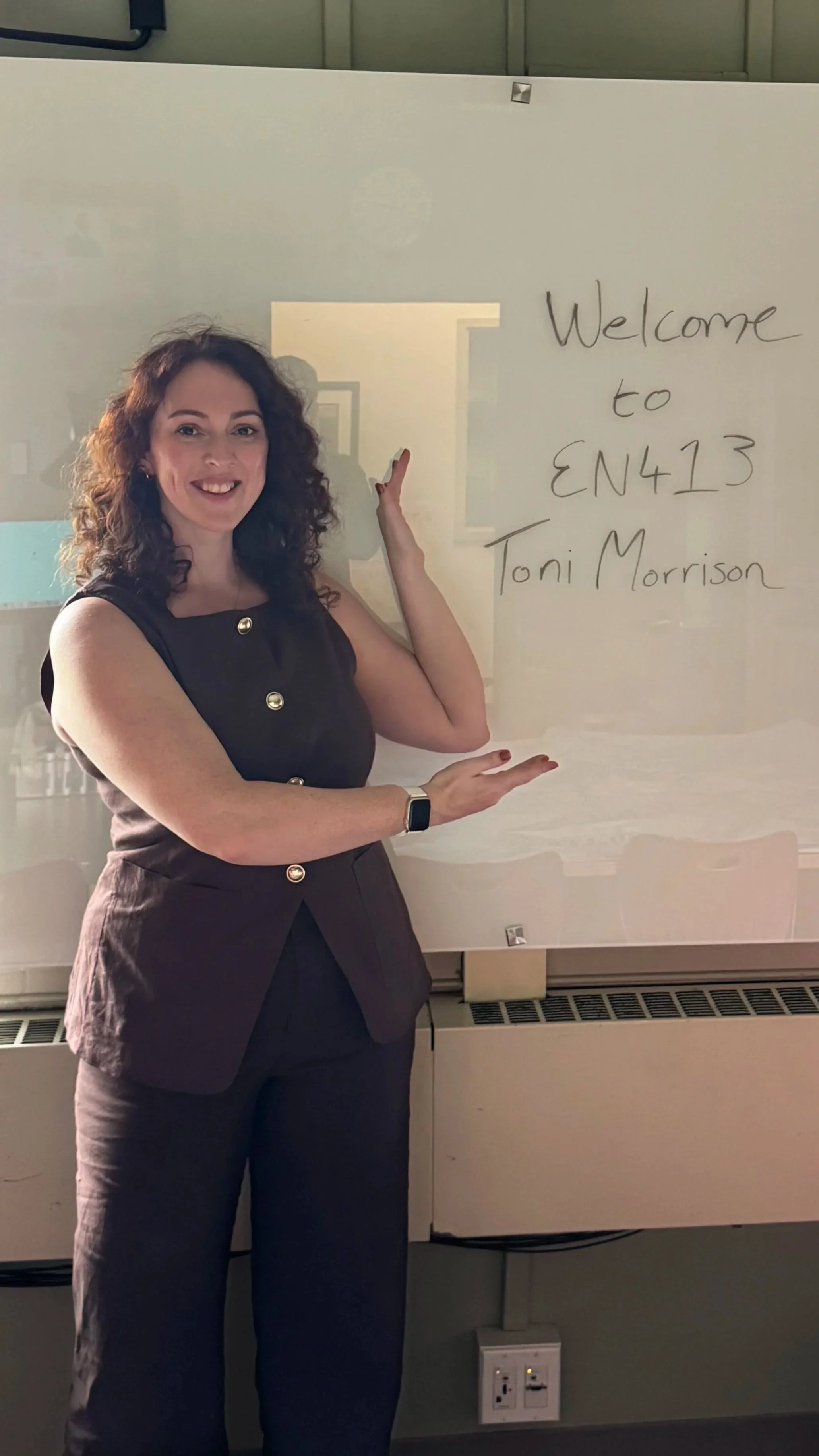
EN413 Toni Morrison: Special Author Course
Toni Morrison was, and remains, a key voice of American literature. This course examines Morrison’s work across genres to take in the breadth, depth, and length of her literary career as well as the legacies she left on the American literary landscape. The class is arranged loosely chronologically as we move through her novels, but alongside her novels you will encounter Morrison as critic, editor, playwright, children’s author, and essayist. You will explore Morrison as novelist, theorist, and sometimes humorist. We will explore themes such as gender, race, freedom, consumption, childhood and family through her work.
Colby College. Fall 2024 and Spring 2027.
-
EN264 African American Women's Writing: Legacies of the Black Venus
This course explores African American Women’s writing in the twentieth and twenty-first centuries. We pay particular attention to themes of identity, race, gender, sexuality, beauty, cosmetics, hair, and fashion. Includes work on authors such as Pauline Hopkins, Nella Larsen, Zora Neale Hurston, Alice Walker, Suzan Lori-Parks, Toni Morrison, and Robin Coste Lewis.
Colby College. Fall 2024.
-
EN342: Literature of the Urban and Rural
A class that explores how environments are experienced by those who live in, visit, and are exiled from them, as well as how “place” contributes to constructions of both race and gender. We explore the dynamic play of margin, center, metropole, nation, and local identities by reading authors such as Richard Wright, Jesmyn Ward, and NK Jemisin.
Colby College. Spring 2025 and Spring 2027.
-
EN345: Race in the Modern American Novel
Major works of American fiction including those by F. Scott Fitzgerald, James Weldon Johnson, Toni Morrison, and others, will be analyzed to emphasize how race is constructed in 20th and 21st century American literature.
Colby College, Spring 2025.
-
EN120: Writing as a Fan
An introduction to college writing course in which we explore how writers adapt, reclaim, repurpose, and critique the work of other writers. We explore how writing as a “fan” can make us better, and more attentive, and even more critical readers and how reading with enthusiasm can make us more effective and thoughtful writers. This class will pay particular attention to the phenomenon of “Racebending” in adaptations. 2024-2027.
-
ENE 343: Intro to African American Literature
This course offers an introduction to African American literature from 1865 to the present, engaging a range of genres including poetry, fiction, essays, art, music, and film. Students will study major writers and intellectual traditions, including Du Bois, Hurston, Baldwin, and Morrison, alongside key cultural movements. The course examines how literature articulates questions of power, freedom, identity, and culture, and how these works shape and respond to American history and experience. Fall 2026
-
EN264: American Literature and Food
Are you what you eat? Exploring how food shapes American literature, cultural memory, and identity across African American and Caribbean traditions through reading Toni Morrison, Jean Toomer, and Michael Twitty, as well as cookbooks. We will examine how food and foodways narrate histories of migration, race, consumption, and gender. Through novels, poetry, and essays, we will consider food as memory, belonging, and resistance. Spring 2027.
Student Testimonials
“Professor McGowan selected each book and planned the order in which we would read them in a way that added to our exploration of Toni Morrison over the semester. We had weekly writing assignments with thoughtful prompts to help us develop our writing. She shared on the first day of class that studies have revealed that writing every week for students leads to significant improvement in the quality of their writing. My writing improved over the semester because of these assignments. They were credit or no credit, depending on if you did the assignment. I appreciated this as I had more freedom to explore new ideas and writing styles than if it had been a more formal assignment. Our final project was a paper to showcase our improvement over the semester. Professor McGowan supported us through the final process by having smaller assignments throughout the semester that contributed to our final paper like an assignment on analyzing a secondary scholarly source that we could then include in our final. I loved the work we did in Professor McGowan's class!”
—STudent 1, Toni Morrison, fall24
“This course prompted me to challenge my old thinking and explore my ideas in new ways. For example, with "Recitatif," we talked about how race is removed from the novel, but as readers, we try to assign a race to the characters. We discussed the implications of assigning race to things and how we do it every day. I took a lot away from this discussion. Professor McGowan's class had many of these discussions, which are relevant to today and helped shape my viewpoint and how I interact in the world. I am thankful that I had the opportunity to take her class. I hope she joins the Colby English department long-term so I can take another class with her during my final year at Colby.”
— Student 2, Toni Morrison, fall24
“At first, I was going to take this course as a distribution requirement, but in the middle of the course, I really enjoyed the writing assignments, especially writing about a particular theme, supporting my evidence, and also writing my thoughts or analysis of what I believed the author is trying to illustrate. I have realized that I enjoyed writing, and because of Professor Grace, I was able to realize that writing papers and essays is what I also enjoy as well, apart from the fact that I want to be on the pre-med track. Therefore, when I get stressed about studying STEM related classes, I step out to take a break by writing an essay. I just love to write essays now, making myself change my major by minoring in English instead of just being a Biology major.”
— STUDENT 3, AFAM Womens Writing, Fall24
“The class felt like a safe space to talk and engage with the concepts. Grace was a wonderful instructor with great knowledge of the subjects we learned about. The strengths of the course was definitely the instructor's ability to stimulate interest in the subject and maintain everyone engaged in the discussion. She truly was successful in making everyone feel comfortable with sharing their thoughts and opinions.”
— Student 4, black venus, SPRING23
“Grace is my favorite teacher that I've had in college so far. She deeply understands the material that she is teaching, and she also cares enough about it to challenge her own views and accept alternative perspectives. Topics we learned about are always interesting and insightful. They are concepts that can be applied to the real world. Directions and expectations for this class are always very clearly stated as well. This course is so unique and interesting. Grace is a wonderful teacher and she encourages intellectual and emotional exploration in a very refreshing way.”
— STUDENT 5, black venus, SPRING23
Student 6, EN345 Race in the Modern American Novel
“Dr. McGowan made class time extremely productive. From close readings of book covers and opening pages, to deep dives into specific quotes, class discussion was natural and interesting. Notably, I felt like the class was never dry or stale. In past classes I've come into class having done the reading, and sort of knowing where the discussion would go. While that did happen in this class, Dr. McGowan was always able to ask certain questions to make the discussion go deeper than I expected.”

“I have actually had her class last fall semester as well, and Professor Grace really inspired me to love English and pursue an English major! Even though I am on the pre-med track, and I have other requirements to complete, I am still determined to become an English major because of Professor Grace!”
Student 8, EN342 Literature of the Urban and Rural

“I found the course to be extremely intellectually challenging. I have taken classes on race, and racial formation and yet I thought you took things to another space. Specifically, the investigation of whiteness - and how that connects to our conversations about Blackness - really stood out as a perspective I had spent less time on in past classes. Further, the investigation of contemporary texts, which discuss how race / racial identity manifest in urban settings, and as a consequence of generational racial dynamics, is something I won't soon forget.”
-Student 7, EN345 Race in the modern American novel
“This class discussed the importance of studying race and fandom and their corssover, making for very engaging content and important takeaways! I very much enjoyed learning from Professor McGowan.”
Student 9, EN120 Writing as a Fan
